
Multi-Unit Burger Franchise Opportunities with Jack in the Box
Whether you're looking to start your first multi-unit franchise or you're looking to add Jack in the Box to your portfolio, learn what makes us a great fit for multi-unit franchisees.
Free Download
Jack in the Box Franchising Brochure
Learn everything you need to know about franchising with Jack in the Box.
Grab it today!-
Our Story
- How Long Has Jack in the Box Been in Business?
- Where Was the First Jack in the Box?
- How Did Jack in the Box Expand Across the U.S.?
- Who is Jack Box?
- What’s Our Mission?
- What Are Our Cultural Values?
- We Even Have Our Own Mantra!
- Why Do We Love Multi-Unit Investors?
- How Does Jack in the Box Serve Communities?
-
What Makes Jack in the Box Different?
- Why Do Customers Appreciate the Wide Variety Our Menu?
- Does Jack Really Invent New Menu Items Throughout the Year?
- What Are Some of Your Recent Menu Innovations?
- What Time Does Jack in the Box Close?
- How Does Jack in the Box Support Its Franchisees?
- Will Jack Help Me with Real Estate and Site Selection?
- Will l Get In-Person Support from Jack’s Corporate Team?
- What Kind of Leasing Support Can I get?
- Will You Help Me During the Construction Process?
- How Do You Support Franchisees in Setting Up Operations and in Preopening?
- What Kind of Support Will I Get After I’m Open?
- How Will Jack Help Me Promote My Store?
- Why Is Jack in the Box a Multi-Unit Investor Franchise?
- How Many Dayparts Does Jack in the Box Serve?
-
How Does Jack in the Box Stay Ahead of the Game?
-
How Much does it Cost to Open a Jack in the Box Franchise?
- How Much Does a Jack in The Box Franchise Make?
- What is Jack in the Box’s Royalty Fee?
- What is Jack in the Box’s Marketing Fee?
- What is the Jack in the Box Franchise Fee?
- What Is the Development Fee for Multi-Unit Ownership?
- Does Jack in the Box Offer Multi-Unit Franchise Incentives?
- Does Jack in the Box Offer Incentives for Veterans?
- What is Jack’s Initial Investment?
- How Many Franchises does Jack in the Box Have?
- What States Does Jack in the Box Currently Have Stores In?
-
How Large is Jack’s Opportunity for Market Growth?
Multi-Unit Burger Franchise: Built for Portfolio Growth
Jack in the Box is a multi-unit franchise system by design
We've built our entire support infrastructure around multi-unit development. Here are the primary reasons multi-unit franchisees chose Jack in the Box for their portfolios;
- Two multi-unit franchise incentives available
- Dedicated support from real estate and construction through grand-opening and operations support.
- Strong unit economics: $1.9M average unit volume
- 24/7 operations across all 5 dayparts
- 75+ year proven brand with national recognition
- Prime whitespace availability
Our story
How Long Has Jack in the Box Been in Business?
Jack in the Box is celebrating over 70 years with more than 2,100 locations in 21 states. Over our history, we’ve built some serious differentiators in the fast-food franchise space that other companies would be hungry for our dedicated amazing franchisees and their teams, an iconic brand that stands out in a competitive and growing category, a unique craveable menu where any item can be ordered any time of day, and most importantly, our passionate customers!
Where Was the First Jack in the Box?
In 1951, a businessman named Robert O. Peterson opened the first Jack in the Box restaurant on what was then the main east-west thoroughfare leading into San Diego. With a big jack-in-the-box clown keeping watch from its roof, the tiny restaurant featured a revolutionary two-way intercom and a drive-thru window, where passing motorists could stop to get a burger for just 18 cents.
Peterson also operated a food-manufacturing company called the San Diego Commissary Co. In 1960, San Diego Commissary changed its name to Foodmaker Co. That same year Jack established its first out-of-state locations in Phoenix, Arizona. New restaurants in Houston and Dallas-Ft. Worth areas of Texas soon followed.
How Did Jack in the Box Expand Across the U.S.?
Ralston Purina Co. acquired Foodmaker in 1968, commencing a period of major growth for Jack that was driven by the goal to establish new footholds in the Eastern and Midwestern United States. By 1979, some 1,000 locations had been founded throughout the country.
Members of Foodmaker’s management team partnered with outside investors in 1985 to leverage a buyout from Ralston Purina. Foodmaker went public for two years before converting back to private ownership in 1988. The parent company went public again in 1992, offering 17.2 million shares at $15 apiece.
Who is Jack Box?
In 1995, Foodmaker launched “Jack’s Back,” a series of TV commercials featuring our fictional founder, Jack Box. The campaign was wildly received and continues to this day, making it the longest-running campaign in the QSR industry.
And in a nod to the brand's enduring iconography, in 1999, we changed the name of our parent company from Foodmaker to Jack in the Box, Inc. Today, we're traded on the Nasdaq exchange under the ticker symbol JACK.
What’s Our Mission?
Ever since Jack in the Box served its first hamburger in 1951, our company has built a reputation for quality, value, and integrity. The continued success of our company and the Jack in the Box brand depends upon our earning and maintaining the trust of our guests as well as that of all our other stakeholders, including:
- franchisees
- fellow employees
- suppliers and other business partners
- shareholders
- the communities in which we do business

What Are Our Cultural Values?
At Jack in the Box, our culture is people first. We understand the importance of treating people well — all people, and not simply our guests. We expect everyone throughout our system to be treated with fairness, respect, and dignity. We honor the wonderful variety of experiences and characteristics that each person at Jack in the Box brings to work every day and believe these differences enable us to see and understand our guests, franchisees, suppliers, and business colleagues through a rich and varied set of perspectives that make each of us better at what we do.
We Even Have Our Own Mantra!
Our cultural values and core mission are at the heart of what we do, and we’ve encapsulated it with a mantra:
We're Jack in the Box, but we've never stayed in the box. From our menu items to our employees, to our franchisees, we've always popped out in innovative, fun, unexpected ways. Unapologetically danced to the beat of our own music box. Being the curly fries in the world of regular fries, doing things others don't, serving things others won't, and challenging the status quo.
Why Do We Love Multi-Unit Investors?
Most of our 110+ franchisees are multi-unit operators, with the average franchisee owning 20 restaurants.
Our franchisees have a deep passion for our brand and strong operational expertise in our system. That’s because an astounding 75% of them originally started with Jack working in the kitchen, serving customers, and managing operations. Many of them have owned their stores for generations, and we’re now seeing second-and third-generation franchisees become operators themselves. Since many of them grew up together in and around Jack, they care deeply about our brand and about each other. And that loyalty and trust is perhaps our greatest competitive advantage. In fact, with 2,100 locations operating across the country, 2/3 of our franchisees say they want to grow further!
A unique fact about Jack in the Box is that 46 of our franchisees started with Jack before 1990! Our longest-tenured franchisee has been with Jack in the Box since 1966! We think this speaks to the family-style culture we’ve cultivated at Jack in the Box.
How Does Jack in the Box Serve Communities?
We’re dedicated to making a positive difference in the communities in which our employees, franchisees, and guests work and live. One way that we give back is through the Jack in the Box Foundation. Established in 1998, the Jack in the Box Foundation is a 501(c) (3) nonprofit organization that primarily supports causes that help at-risk children and youth.
Free Download
Grab the Complete Multi-Unit Franchise Guide Today
Download a copy of this information in an easier to read, more graphical version.
Download today
What Makes Jack in the Box Different?
Why Do Customers Appreciate the Wide Variety of Our Menu?
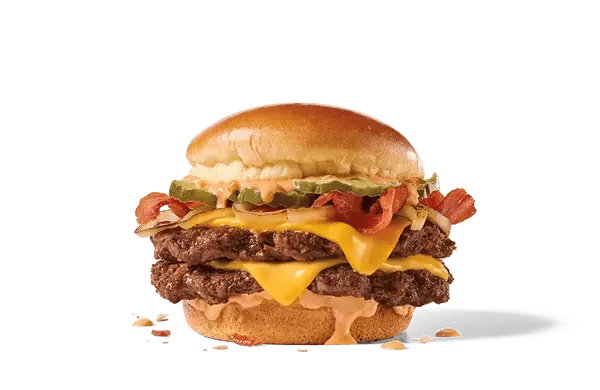
Our menu variety is unique in the industry, as is the passionate loyalty generations of fans have developed for such a varied array of different items. Our menu has a cult following that goes beyond the average QSR, and our devoted group of passionate guests loves to shout out about their Jack in the Box cravings. And, you might even spot a Jack in the Box antenna ball on their cars! This wide range of products, from tacos to burgers to chicken sandwiches and churros to breakfast croissants and snacks, is just one of our competitive advantages. Our offerings go beyond just basic burgers and fries and amazing shakes; we excel at a diverse array of items that can be ordered any time of day. So no matter when your customers’ cravings strike, Jack has them covered!
Does Jack Really Invent New Menu Items Throughout the Year?
We sure do. Jack’s innovative spirit has been our driving force for over 70 years, and this is reflected in our menu. Our iconic innovations – like the Sourdough Jack and our famed tacos – are what keep generations of customers coming back visit after visit. In 1969, we were the first fast-food chain to offer a breakfast sandwich, which would later be called the Breakfast Jack. In 1971, we introduced our famous Jumbo Jack, and in 1982, Jack in the Box introduced the first portable salad in the fast-food industry. Our 1995 marketing campaign – Jack’s Back – became the longest ongoing advertising campaign in the QSR industry. By 2007, Jack in the Box introduced the first 100% sirloin burger, and we’re still focusing on continued innovation today. Innovation is built into our DNA.
What Are Some of Your Recent Menu Innovations?
From the Cluck Sandwich to our Sauced & Loaded snacking lineup, our recent cult innovations have been eagerly embraced by Jack’s most loyal fans and are helping us gain a new legion of fans. One of our most recent debuts is our Tiny Tacos, which was quickly followed up by our Spicy Tiny Tacos and our Loaded Spicy Tiny Tacos. In 2021, we partnered with Jason Derulo on the launch of our "One in a Mill" virtual restaurant concepts. This promotion was offered exclusively on Uber Eats and had multiple unique menu items only offered through these virtual kitchens. Rest assured, our R&D team is always working on the next fan favorite!
What Time Does Jack in the Box Close?
Never! The last part of Jack's winning product strategy is our accessibility. We’re available 24/7 with an all-day, everyday menu, which sets Jack apart from the competition. So, if you want tacos for breakfast, we have you covered. Breakfast for dinner? Be our guest. In fact, it’s our accessibility that has been helping drive our strong performance, especially during our breakfast and late-night dayparts. By offering all five dayparts, you’re able to capture customers throughout the day and capitalize on traffic when your competitors might be closed.
How Does Jack in the Box Support Its Franchisees?
Last year, we ushered in a new, growth-focused leadership team with deep industry experience and a drive to strengthen Jack’s relationships with its franchisees. We’ve enhanced every aspect of our franchisee support programs with the goal of creating a franchise opportunity like no other QSR. We provide support to franchisees across multiple areas. Here are some examples of how we’ll support you in the opening of your restaurants.
Will Jack Help Me with Real Estate and Site Selection?
Our goal is to educate our franchisees on their potential markets so they can maximize their potential. Our real estate team is stacked with industry experts who help our franchisees take the lead in their markets using the best in real estate planning software and direct hands-on experience. We provide a comprehensive analysis that gives our franchisees a full picture of their market(s), including multi-unit location planning in a target territory, population, and consumer analytics for a given trade area, traffic counts along the roads around your location, and much more.
Will l Get In-Person Support from Jack’s Corporate Team?
Absolutely. Though we utilize technology to give us a great understanding of our markets, our team will tour markets with a "boots on the ground" approach to visitidentified sites in person. This helps us gain an understanding of real estate that technology can't deliver and allows us to see things software can't. Our team has an extensive history in identifying real estate opportunities, and this benefit is part of what you receive as a franchisee. Technology is a wonderful tool, but it can't replace years of industry experience. Our team is here to support you using all available tools.
.webp?width=600&height=340&name=Jack%20in%20the%20Box%20Double%20Jack%20Burger%20WebP%20(600%20x%20340%20px).webp "Double Jack Burger with lettuce, cheese, tomato, pickles, mustard, ketchup and onions.")
What Kind of Leasing Support Can I get?
The Jack in the Box leasing team is a welcomed asset to franchisees who choose to lease their locations. When needed, we help you in identifying key things to look for in leases that you might overlook. With our years of experience, we help you understand the key components of your lease. Our team specializes in lease negotiations and will be by your side to help you negotiate the best possible commercial lease for you and your restaurant. Franchisees can count on our in-house experts to help you every step of the way. We're here to help you succeed. The best part? This comprehensive support is all included in our initial franchise fee.
Will You Help Me During the Construction Process?
Yes. Once a franchisee has closed on their location, Jack’s construction team works with you to begin the construction process. We’ll assist you with architectural selection, permitting, finding the right general contractor, ordering your store décor and signage, and scheduling utility services and hookups. From store design and blueprints to understanding what materials are needed to design your dream restaurant, our team is here to support you.
How Do You Support Franchisees in Setting Up Operations and in Preopening?
Before opening, our operations team assists franchisees with ordering their inventory, recruiting employees, preopening, and training staff. Also, prior to opening, each franchisee or their designated market operator must complete Jack’s 10 to 14-week training program. This program is typically held in San Diego, but in some instances, can take place closer to your location if a training store is approved and available. Prior to opening, we also provide a web-based training program that all Jack in the Box associates must complete, along with several required courses in food safety.
What Kind of Support Will I Get After I’m Open?
Once a restaurant opens, Jack offers franchisees and their employees' access to our training materials, new product preparation guides, and information on new procedures and requisite training. You can expect periodic consultation and advice on your store’s operations and marketing, including studies to improve labor efficiency and technology and equipment enhancement. You will also be assigned a franchise business consultant(s) or FBCthat will become your point of contact for any needs or questions you may have on a day-to-day basis. Our FBC’s will work with you to implement new marketing campaigns, equipment ordering, help with your POS system, etc. When something is outside their area of expertise, they will help connect you with someone internally who can help you further. Our FBC’s are vital to our business and a tremendous asset for you as a franchisee.
How Will Jack Help Me Promote My Store?
As in everything we do, Jack creates advertising and promotional campaigns that are unapologetically outside the box. We cut through the marketing clutter in a highly competitive industry to connect with customers through a mix of media. We use an omnichannel approach when it comes to reaching our customers to drive traffic to your stores and create brand awareness. We leverage platforms like TV, radio, Facebook, Instagram, TikTok, and more to be top of mind for consumers across all of our markets.
We also offer franchisees regional marketing programs to help find new customers using customized marketing plans and options, including sports sponsorships, digital and social media, billboards, radio remotes, and cinema advertising. We offer support and assistance with things like the following:
- Grand opening marketing
- Marketing collateral and POP signage design
- National branding campaigns
- Digital marketing campaigns
- LTO marketing materials
- And many more
With our fantastic marketing and communications team, you can rest assured that Jack in the Box is here to help you with all your marketing needs!
Why Is Jack in the Box a Multi-Unit Investor Franchise?
Most of our 110+ franchise owners are multi-unit operators, with the average franchisee owning a total of 15 restaurants. In fact, with 2,100 locations operating across the country, 2/3 of our franchisees say they want to grow further!
Our franchisees have a deep passion for our brand, and many have operational expertise within our system. That's because an astounding 75% of them originally started with Jack working in areas like the kitchen, serving customers, and managing operations. Many of them have owned their stores for generations, and we're now seeing second-and third-generation franchisees become operators themselves.
Since many of them grew up together in and around Jack, they care deeply about our brand and about each other. And that loyalty and trust is perhaps our greatest strategy in distinguishing us from other QSRs.
How Many Dayparts Does Jack in the Box Serve?
Breakfast?
Lunch?
Dinner?
Late Night?
Snacks?
Whenever!
Whereas many QSRs offer two to three-dayparts, Jack is known for our five-daypart menu. And we offer every menu item all day, every day. Jack fans count on us to be open whenever they’re hungry, serving whatever they crave no matter the time. The variety and accessibility of our food are what drive our strong performance and unmatched brand loyalty.
Free Download
Grab the Complete Document Today
Download a copy of this information in an easier to read, more graphical version.
Download today
How Does Jack in the Box Stay Ahead of the Game?
We’re Jack in the Box, but we’ve never stayed in the box. From our menu items to our employees to our franchisees, we’ve always popped out in innovative, fun, and unexpected ways.
What Do You Serve Besides Burgers?
Jack in the Box is anything but just another burger player. We offer one of the most varied menus in the quick-serve industry. With the ability to serve our guests whatever they crave, whenever they crave it, we’ve managed to build serious brand love across a wide range of products.
And we’re always creating new and exciting offerings. This variety gives Jack a strong competitive advantage, with opportunities to create unique meal bundles, innovate new pop-up items, and satisfy a wide range of cravings that makes us a family staple in delivery and digital.
What Time Do You Serve Breakfast?
All-day, all night, 24/7! In 1969, we transformed breakfast-on-the-go with the industry's first breakfast sandwich – a fresh-cracked egg with a slice of ham and American cheese on a hamburger bun. And while the iconic Breakfast Jack remains a fan favorite today, it shares the marquee with a serious lineup of breakfast cult favorites – all available whenever our customers crave it.
Does Jack Serve Different Items Depending on the Time of Day?
Nope! At Jack in the Box, we quickly learned that customers don’t just crave breakfast in the morning or churros for a snack. They want our Cluck Chicken Sandwich and our signature eggrolls for breakfast, lunch, and dinner. So, every menu item we sell can be ordered any time of day. If your customers crave their favorite food throughout the day, why would we stop them from satisfying their cravings?
Did Jack Really Invent the Drive-Thru?
Why, yes, we did. Before Jack, drivers had to pull up to a restaurant’s window to order their meal. That all changed in 1951 when founder Oscar Peterson obtained the rights to a cutting-edge, two-way intercom system from a restaurateur in Alaska. Peterson installed the system in a jack-in-the-box clown head at his original store in San Diego. It was such a hit that he soon fashioned talking clown heads at all his Jack in the Box locations -- thus giving birth to the great American fast food drive-thru we know and love today. So while many others race to add drive-thru’s to their concepts, we’ve been embracing them for decades!
What Other Menu Items Did Jack Invent?
A lot! For example, we introduced the first portable salad in the fast-food industry in 1982. Talk about being ahead of the game! We also raised the bar for the quick-serve industry once again in 2007, launching the first 100% Sirloin Burger in the industry.
Is Jack in the Box a Publicly Traded Company?
In 2009, Jack Box stepped up to the Nasdaq podium and rang in a new era for the iconic brand. After 50 years operating under the parent company Foodmaker, Inc., Jack officially changed the name to Jack in the Box Inc. and moved the company over from the New York Stock Exchange. The move celebrated the enduring impact of the iconic brand and solidified an ambitious commitment to grow our regional footprint.
Free Download
Grab the Complete Document Today
Download a copy of this information in an easier to read, more graphical version.
Download today
How Much does it Cost to Open a Jack in the Box Franchise?
If you’re considering investing in a multi-unit franchise, there’s never been a better time to invest in a Jack in the Box. We’re partnering with new and existing franchisees to broaden Jack’s reach within our existing footprint -- and beyond. And we’re looking for well-capitalized investors with solid experience in their markets to join us in this expansion. Whether you’re looking for a burger franchise, a chicken franchise, or a taco franchise, Jack in the Box has something for nearly everyone.
How Much Does a Jack in The Box Franchise Make?
Jack in the Box is known throughout the QSR industry for its exceptional store-level profitability and strong AUVs. Our system-wide AUV remains highly competitive, ranking among the Top 20 in the fast-food franchise industry.
Our 2026 Item 19 reports our Average Gross Sales for Franchised Restaurants is $1,913,335. This data was pulled from the Item 19 in our 2026 FDD.
What is Jack in the Box’s Royalty Fee?
Jack in the Box has a royalty fee of 5% of gross sales.
What is Jack in the Box’s Marketing Fee?
Jack in the Box has a Marketing Fee of 5% of gross sales.
What is the Jack in the Box Franchise Fee?
When you sign our Franchise Agreement, you must pay Jack in the Box an Initial Franchise Fee. The Initial Franchise Fee is typical $50,000 for each franchised restaurant, plus any tax or other fee imposed upon Jack in the Box due to the collection of the Initial Franchise Fee. If your franchise term is for less than the standard 20 years, the Initial Franchise Fee is $2,500 for each year or partial year exceeding six months. If you will be operating at a nontraditional location, the Initial Franchise Fee is $25,000 for each unit, plus any taxes and fees imposed on us due to collection of the Initial Franchise Fee.
What Is the Development Fee for Multi-Unit Ownership?
If you sign a Multi-Unit Development Agreement, we grant you the right to construct an agreed-upon number of Jack in the Box restaurants in a specified geographic area. The minimum number of restaurants that can be developed under a Multi-Unit Development Agreement is two. If you are a new developer or franchisee to our System, when you sign the Multi-Unit Development Agreement, you must pay us a non-refundable Development Fee, calculated as follows: 1) $50,000 for the first new restaurant, and 2) $10,000 for each additional new restaurant. If you are an existing developer or franchisee with our System, when you sign the Multi-Unit Development Agreement, you must pay us a non-refundable Development Fee equal to $10,000 for each new restaurant. If you are in full compliance with the Multi-Unit Development Agreement and any other agreements with us, we will credit the portion of the Development Fee for the particular restaurant towards the Initial Franchise Fee for that restaurant. The Franchise Fee for each particular restaurant is due when you sign the required Franchise Agreement.
Does Jack in the Box Offer Multi-Unit Franchise Incentives?
Yes! To help incentivize growth in key markets, Jack in the Box is offering qualifying multi-unit investors reduced franchise royalties during the first five years of operation. Under our current Development Incentive Program, if you sign a Development Agreement for a minimum of three restaurants to be developed and opened under the development schedule during the time frames specified in the Development Agreement, and certain other requirements are met, you may be eligible for one the following incentive options, at our
Jack in the Box Multi-Unit Franchise Incentive
If you open the Restaurant on or before the required date in the development schedule, we will loan you $150,000 at 0% interest to be used solely for development costs associated with that restaurant. The loan will be repaid by crediting 100% of the royalty payments for that restaurant otherwise due until the loan is paid in full (i.e., payments will be made by crediting the appropriate portion of royalty payments toward the principal balance outstanding). If the particular restaurant is sold or permanently closed and the loan has not been fully repaid, the remaining principal balance is due in full.
If you close a restaurant and then open a replacement restaurant, it will not be eligible for this incentive. The Company may discontinue or modify this Development Incentive Program at any time.
More details about this program can be found in our Franchise Disclosure Document. Need a copy of our FDD? Please reach out to our team here.
Jack in the Box Select Market Incentive Program
We offer an incentive to certain franchisees who have signed a Multi-Unit Development Agreement pursuant to which they have committed to open at least three (3) Restaurants in a ”Select Market.” For the purposes hereof, a “Select Market” is one in which food or other operating costs for franchisees are higher than average costs for other franchisees, due to supply chain conditions, as determined from time to time by us in our sole discretion. If we, in our sole discretion, determine that any Restaurants opened pursuant to such Multi-Unit Development Agreement qualify for this incentive, your Royalty for each qualifying Restaurant (which is currently 5% of Gross Sales) will be reduced to 2% of Gross Sales for the first five years after the subject qualifying Restaurant opens.
Does Jack in the Box Offer Incentives for Veterans?
Yes, we do. We participate in the International Franchise Association’s Veterans Transition Franchise Initiative (“VetFran”) to provide franchise opportunities to qualifying veterans. Our VetFran incentive is called the Jack in the Box Veterans Program. Under the Veterans Program, we reduce the Initial Franchise Fee for the first new Restaurant by 25%, or $12,500. Accordingly, the Initial Franchise Fee paid to us is $37,500. This incentive may not be combined with any other incentive program. To qualify for the Veterans Program, a prospective franchisee must: request the Veterans Program at the time of application; meet our then-current qualifications for new franchisees; be at least 51% legally and beneficially owned by persons meeting our qualifying veteran status; not have previously received a similar incentive from us. Jack in the Box may discontinue or modify this Veterans Program at any time.
What is the Jack in the Box Initial Investment?
Based on our Item 7 in our 2026 FDD, we estimate the initial investment in a Jack in the Box will cost between $1,909,500 to $4,041,500 per store. These figures include virtually everything it takes to start the restaurant, including:
- One-time initial franchise fee up to $50,000
- Building improvements up to $785,000+
- Initial inventory up to $20,000+
- Three months of operating funds
How Many Franchises does Jack in the Box Have?
Jack in the Box currently has more than 2,100 stores across the country. We are ranked #23 in Nation's Restaurant News list of The 50 Biggest Restaurant Chains in America 2025.
What States Does Jack in the Box Currently Have Stores In?
Our stores can be found in Arizona, California, Colorado, Flroida, Georgia, Hawaii, Idaho, Illinois, Indiana, Kansas, Louisiana, Missouri, North Carolina, New Mexico, Nevada, Ohio, Oklahoma, Oregon, South Carolina, Tennessee, Texas, Utah, and Washington.
How Large is Jack’s Opportunity for Market Growth?
The growth opportunity for Jack is enormous. We’re currently in 21 states, and most of them have opportunities for multi-unit investment growth. We estimate we have a potential for another 1,500 restaurants within our existing footprint alone, and we’re looking beyond to new and emerging markets in a number of untapped territories. To that end, we’re aligning with our existing multi-unit franchisees to grow their markets as we seek new multi-unit investors to join our family.
Which Existing Markets Is Jack in the Box Expanding?
Among our mature markets, Jack in the Box is targeting an expanse of new opportunities for multi-unit investors in Oregon and Pennsylvania, as well as limited opportunities in Arizona, Hawaii, Idaho, Nevada, and Washington.
Where is Jack in the Box Forging New Markets?
There has never been a better time for Multi-Unit Investors to get in on the ground level of a historic expansion. Right now, Jack in the Box is looking to go from being a top regional player to a top national one. We’re currently pushing new frontiers in Arkansas, Colorado, Illinois, Indiana, Kansas, Kentucky, Louisiana, New Mexico, North Carolina, Ohio, Oklahoma, South Carolina, Tennessee, Utah, and -- very soon -- Missouri.
If you're a multi-unit operator sizing up your next brand, this page is built for you. It pulls directly from the 2026 FDD, strips out the filler, and tells you what the actual economics, incentives, and territory picture look like for Jack in the Box in 2026. No sales-deck language. Just the data you'd want if you were going to write a check.
I'm going to walk you through the investment range, the two incentive programs we currently offer multi-unit operators, where we have whitespace, and how our development model is structured. Along the way I'll flag the places where our page used to be out of date or vague so you have the current picture.
Key Takeaways
-
Jack in the Box runs 2,136 restaurants system-wide as of the 2025 fiscal year end (1,985 franchised and 151 company-owned), reported in the 2026 FDD.
-
Average gross sales for franchised restaurants in FY2025 were $1,913,335 based on 1,754 units reported in Item 19 of the 2026 FDD.
-
The Item 7 initial investment range for a prototypical new build runs $1,909,500 to $4,041,500 per restaurant, excluding land.
-
Two active multi-unit incentive programs: a $150,000 zero-interest development loan and a royalty reduction from 5% to 2% for the first five years in Select Markets. Both require a minimum of three restaurants under a development agreement.
-
Qualifying veterans receive a 25% ($12,500) reduction on the Initial Franchise Fee for their first restaurant through the Jack in the Box Veterans Program.
-
The franchise system is overwhelmingly multi-unit: most of our roughly 110+ franchisees operate multiple restaurants, and two-thirds say they want to grow further.
-
Prime development whitespace sits in Arkansas, Colorado, Florida, Georgia, Illinois, Indiana, Kentucky, Michigan, Oklahoma, Tennessee, Utah, and selective expansion across existing western markets.
-
The royalty is 5% of gross sales and the marketing fee is 5% of gross sales.
Why This Guide Was Rebuilt for 2026
The previous version of this page had been living online for several years. A few pieces of it had quietly drifted out of date: the state list contained a typo (Florida was misspelled), the average gross sales number was technically correct but referenced figures that had been superseded, and the two different "average restaurants per franchisee" numbers didn't reconcile. None of that helps a serious investor.
Every number you'll read in this guide is sourced from Item 5, Item 6, Item 7, Item 11, Item 17, Item 19, or Item 20 of the 2026 FDD. Where the FDD doesn't make a claim, I don't make one either. You'll see me acknowledge unknowns rather than paper over them.
What It Costs to Open a Jack in the Box in 2026
Let's start with the number you care about most. Per Item 7 of the 2026 FDD, the estimated initial investment for a single prototypical Jack in the Box restaurant runs from $1,909,500 on the low end to $4,041,500 on the high end. That figure excludes the cost of land and financing.
For context, the two-restaurant development agreement adds a development fee and takes the total estimated initial investment to a range of $3,820,000 to $8,088,000 for the two combined, again excluding land. That number is not a surprise add-on. It's the same per-store costs rolled up, plus a one-time development fee.
Item 7 Initial Investment Breakdown
|
Expenditure |
Low |
High |
|
Initial franchise fee |
$50,000 |
$50,000 |
|
Grand opening advertising fee |
$0 |
$10,000 |
|
Trade area survey analysis |
$0 |
$7,500 |
|
Architect and engineering services |
$44,000 |
$216,000 |
|
Environmental assessment |
$2,500 |
$34,000 |
|
On-site improvements |
$337,000 |
$825,000 |
|
Building improvements |
$626,000 |
$1,250,400 |
|
Furniture, fixtures, equipment |
$499,000 |
$967,000 |
|
IT equipment and installation |
$45,000 |
$60,000 |
|
Initial inventory |
$12,000 |
$20,000 |
|
Pre-opening training and inventory |
$110,000 |
$115,000 |
|
Pre-opening additional funds |
$14,000 |
$17,000 |
|
Uniforms |
$3,000 |
$5,000 |
|
Operating cash |
$1,200 |
$3,000 |
|
Licenses and utility deposits |
$500 |
$3,000 |
|
Additional funds (3 months) |
$165,300 |
$458,600 |
|
Total (excluding land, financing) |
$1,909,500 |
$4,041,500 |
Source: Jack in the Box 2026 FDD, Item 7, based on MK12 prototypical buildings developed in fiscal years 2023 to 2025. Three prototypical building options plus a modular option range from 1,317 to 2,440 square feet.
What Franchised Restaurants Actually Gross
Item 19 of the 2026 FDD reports average gross sales of $1,913,335 for 1,754 franchised restaurants for fiscal year 2025. The median gross sales figure was $1,830,083. The highest performer in the reporting group did $5,882,584. The lowest did $624,106.
The tiered view is what I'd actually want if I were evaluating this brand as an operator:
|
Tier |
Avg Gross Sales |
Units in Tier |
Units Above Avg |
|
Top third |
$2,632,491 |
585 |
175 (29.9%) |
|
Middle third |
$1,839,539 |
585 |
189 (32.3%) |
|
Bottom third |
$1,266,871 |
584 |
319 (54.6%) |
|
System total |
$1,913,335 |
1,754 |
715 (40.8%) |
A top-tier Jack in the Box does roughly two-and-a-half million dollars in annual sales. The spread between top and bottom tiers is real and reflects factors you'd expect: market, trade area, operator quality, and tenure. This is not a brand where every store performs like the average.
What the FDD doesn't claim, and what I won't estimate, is franchisee-level profitability. Item 19 reports gross sales plus a handful of select cost categories (advertising, royalty, utilities, occupancy). It doesn't report net income. Your cost structure, real estate terms, and management model will drive your actual operating margin.
The Two Multi-Unit Incentive Programs Available in 2026
This is where the math actually gets interesting for multi-unit operators. Jack in the Box runs two distinct incentive programs, and both are explicitly built for developers committing to three or more restaurants.
1. Development Incentive Program
If you sign a development agreement for at least three restaurants and open each one on or before the scheduled date, you're eligible for a $150,000 loan at 0% interest per qualifying restaurant, used solely for development costs.
Here's the mechanic that matters: the loan is repaid by crediting 100% of the royalty payments for that restaurant against the principal until it's paid off. In practical terms, your effective royalty for the first stretch of operation is zero on that unit. At a restaurant doing roughly average gross sales ($1.9M) with a 5% royalty, that works out to about $95,000 in annual royalty payments being redirected to pay down the loan. The loan pays itself off in roughly 18 months of royalty credits on an average-performing store, though that timing is illustrative and not guaranteed.
The fine print worth noting: if the restaurant is sold or permanently closed before the loan is fully repaid, the remaining balance comes due. A replacement restaurant opened after a closure does not qualify. Jack in the Box can discontinue or modify this program at any time, so the time to lock it in is when you're negotiating the development agreement.
2. Select Market Incentive Program
The second program is built for operators entering markets where food or other operating costs run above average due to supply chain conditions. It requires the same minimum commitment — three restaurants under a multi-unit development agreement.
For qualifying restaurants, the royalty drops from 5% of gross sales to 2% of gross sales for the first five years after that restaurant opens. That's a 60% reduction on the royalty line for half a decade.
On an average-performing store ($1,913,335 in gross sales), the difference between a 5% royalty and a 2% royalty is roughly $57,400 per year, per restaurant. Over five years, that's about $287,000 per unit. Across a three-restaurant development, you're looking at roughly $860,000 in royalty savings over the incentive period on average-performing stores. Your own numbers will vary with actual sales performance.
Whether a specific market qualifies as a Select Market is determined by the company in its sole discretion, so this is a conversation to have with our development team early in the diligence process rather than an assumption to make on your own.
One thing the FDD is explicit about: the Veterans Program cannot be combined with these incentives.
Jack in the Box Veterans Program
We participate in the International Franchise Association's VetFran initiative. Qualifying veterans receive a 25% reduction on the Initial Franchise Fee for their first new restaurant, which brings it down from $50,000 to $37,500 — a $12,500 savings.
To qualify, you need to request the program at the time of application, meet our standard franchisee qualifications, have at least 51% legal and beneficial ownership by qualifying veterans, and not have previously received a similar incentive from us.
The veteran discount applies only to the first restaurant, and it can't be stacked with the Development Incentive Program or the Select Market Incentive Program. For a single-restaurant veteran entry, this is meaningful. For a three-plus unit commitment, you'll want to run the math against the development programs to see which one produces more value.
Fee Structure at a Glance
Here's what you're paying the franchisor, before any incentives kick in:
|
Fee |
Amount |
When Due |
|
Initial Franchise Fee |
$50,000 per restaurant (standard 20-year term) |
At signing of Franchise Agreement |
|
Nontraditional Franchise Fee |
$25,000 per unit |
At signing |
|
Development Fee (new developers) |
$50,000 first restaurant, $10,000 per additional |
At signing of Development Agreement |
|
Development Fee (existing developers) |
$10,000 per restaurant |
At signing of Development Agreement |
|
Royalty |
5% of gross sales |
Monthly |
|
Marketing Fee |
5% of gross sales |
Monthly |
|
Grand Opening Advertising (Select Market) |
$10,000 |
At signing of Franchise Agreement |
A note on the development fee: if you're in compliance with your development agreement, the per-restaurant portion of the development fee is credited against the Initial Franchise Fee for that specific restaurant when it opens. So for a new developer opening three restaurants, you pay $50,000 + $10,000 + $10,000 = $70,000 in development fees up front, which then reduces the franchise fees owed at each opening. The total cost in fees is the same, but the cash flow timing is different.
Who Actually Operates Jack in the Box Restaurants
The Jack in the Box system is structured around multi-unit operators. Our roughly 110+ franchisees run the substantial majority of restaurants in the system. Most own multiple units, and many have held their franchise agreements across generations — we're now seeing second- and third-generation operators in the system.
A point of pride that's also a point of information: a significant share of our current franchisees started as Jack in the Box employees. Kitchen workers, shift leads, and managers who eventually bought in. That isn't a marketing story. It shapes the culture of the franchisee community in a way that's hard to replicate.
Two-thirds of our current franchisees have told us they want to grow further. Which is relevant for two reasons. First, incumbent operators getting a meaningful share of new territory. Second, new operators entering the system tend to do so with operational respect already baked in, because the longer-tenured operators set the tone.
System Scale as of FY2025
|
Metric |
Count |
|
Total system restaurants (end of FY2025) |
2,136 |
|
Franchised restaurants |
1,985 |
|
Company-owned restaurants |
151 |
|
Total franchisees (approx.) |
110+ |
|
Franchise agreements signed, not yet open |
35 (as of FDD) |
|
Projected new franchised openings in FY2026 |
34 |
Source: Jack in the Box 2026 FDD, Item 20. Counts as of September 28, 2025.
Where the Whitespace Actually Sits in 2026
If you're evaluating Jack in the Box for territory fit, the honest answer is that opportunity is concentrated in a handful of buckets. Here's the breakdown.
New and Emerging Markets
These are markets where Jack in the Box is pushing from regional into national. Real estate options are open, and multi-unit developers have meaningful first-mover advantages in trade area selection:
- Arkansas
- Colorado
- Florida
- Georgia
- Illinois
- Indiana
- Kansas
- Kentucky
- Louisiana
- Michigan
- Missouri
- New Mexico
- North Carolina
- Ohio
- Oklahoma
- South Carolina
- Tennessee
- Utah
- Oregon (meaningful expansion opportunity)
- Pennsylvania (meaningful expansion opportunity)
- Arizona, Hawaii, Idaho, Nevada, Washington (limited opportunities)
Existing Market Expansion
In mature markets where the brand already has significant presence, we're looking at specific multi-unit expansion opportunities in:
Current Footprint
For context, Jack in the Box currently operates in: Arizona, Arkansas, California, Colorado, Florida, Georgia, Hawaii, Idaho, Illinois, Indiana, Kansas, Louisiana, Missouri, Nevada, New Mexico, North Carolina, Ohio, Oklahoma, Oregon, South Carolina, Tennessee, Texas, Utah, Washington, and Guam. California and Texas remain our largest markets by unit count.
Total runway within our existing footprint alone: we estimate room for approximately 1,500 additional restaurants. The company's strategic priority is moving from a top regional QSR brand to a top national one, which is why you're seeing the aggressive expansion list above rather than just infill in existing states.
What Support Multi-Unit Operators Actually Get
I'll keep this section tight because most of it is what you'd expect from any national QSR brand. What matters is where the program has real substance versus where it's just boilerplate.
Real Estate and Site Selection
Our real estate team runs comprehensive trade area analysis using industry-standard planning software plus direct market visits. For multi-unit operators, that extends to multi-unit location planning across a target territory — sequencing site selection so your first three or five units reinforce each other rather than cannibalizing. This is the piece that matters most for operator ROI, because site decisions are effectively permanent.
Leasing
Our in-house leasing team participates in lease negotiations for franchisees who lease their locations. The support is included in the Initial Franchise Fee. If you've negotiated commercial leases before, you know how much this matters. If you haven't, you'll learn quickly how far the language of a commercial lease can swing operator economics over 20 years.
Construction
Once you close on a location, our construction team supports architectural selection, permitting, GC identification, décor and signage ordering, and utility coordination. Three prototypical building designs plus a modular option give you flexibility based on site geometry, size, and preferred orientation — from 1,317 square feet (modular) up to 2,440 square feet.
Training
Each franchisee or designated market operator must complete our 10-to-14-week training program. It's primarily delivered in San Diego but can be delivered closer to your location if a training store is approved and available. Before opening, all associates complete a web-based training program plus required food safety courses.
Operations and Marketing
Each franchisee is assigned a Franchise Business Consultant (FBC) who serves as the day-to-day point of contact for operations, marketing rollouts, equipment orders, POS questions, and operational consultation. Regional marketing programs include sports sponsorships, digital, social, OOH, and cinema — layered on top of national branding campaigns.
The FBC model is how support actually gets delivered in a multi-unit system. The quality of that relationship correlates more with operator outcomes than almost any other piece of franchisor support infrastructure.
Why the Brand Suits Multi-Unit Portfolios
Every major QSR brand will tell you they're a great multi-unit opportunity. Most of them are, at least on paper. Here's the specific structural case for Jack in the Box that you don't get from every competitor.
Five Dayparts, Same Menu
Most QSR brands build around two or three dayparts. Jack in the Box operates five: breakfast, lunch, dinner, late-night, and snacks. And every menu item is available across every daypart. A customer wanting tacos at 3 AM or a breakfast sandwich at 7 PM is a revenue opportunity other operators have to turn away.
For a multi-unit operator, this matters for two reasons. First, revenue diversification across parts of the day that competitors don't serve means you're less exposed to daypart-specific competitive pressure. Second, it means labor scheduling has to be thought through more carefully, which is a meaningful operational skill to build but also a competitive moat once you have it.
24/7 Operating Model
We operate around the clock. That's an operational commitment, not a throwaway line. Late-night daypart is a meaningful revenue contributor, and in markets where competitors close at 10 PM, you're the only game in town for a substantial window.
Menu Variety as a Competitive Moat
Burgers, tacos, chicken sandwiches, breakfast items, shakes, curly fries, churros, Tiny Tacos, egg rolls. Our menu breadth is unusual in QSR, and it's earned us a passionate customer base that's hard for competitors to replicate because it can't be done gradually. You either have the operational complexity built in or you don't.
Brand Tenure
Jack in the Box has been operating since 1951. Seventy-plus years of continuous brand presence, a publicly traded parent company (NASDAQ: JACK), and consistent national awareness. For a multi-unit operator, this reduces brand-risk exposure in a way that emerging concepts cannot match.
Frequently Asked Questions
How much does a Jack in the Box franchise cost in 2026?
Per Item 7 of the 2026 FDD, the initial investment range for a single prototypical restaurant is $1,909,500 to $4,041,500, excluding land and financing costs. For a two-restaurant development agreement, the combined range is $3,820,000 to $8,088,000.
What is the average revenue of a Jack in the Box franchise?
Item 19 of the 2026 FDD reports average gross sales of $1,913,335 for 1,754 franchised restaurants in fiscal year 2025. Median gross sales were $1,830,083. Top-tier restaurants averaged $2,632,491 and the highest-performing restaurant reported $5,882,584 in gross sales.
What is the royalty fee for Jack in the Box?
The royalty is 5% of gross sales, paid monthly. Under the Select Market Incentive Program, the royalty can be reduced to 2% for the first five years on qualifying restaurants for operators committing to at least three restaurants under a multi-unit development agreement.
What is the marketing fee?
The marketing fee is 5% of gross sales, paid monthly. These funds support national branding campaigns, digital infrastructure, and new product launches across the system.
What is the minimum for a multi-unit development agreement?
Two restaurants. Both of our current incentive programs (the Development Incentive Program and the Select Market Incentive Program) require a minimum three-restaurant commitment.
Can I combine the Veterans Program with the multi-unit incentive programs?
No. The Veterans Program cannot be combined with any other incentive program. For veterans considering a multi-unit development, we recommend running the math against all three programs to identify which produces the strongest economics for your specific deal.
How many Jack in the Box restaurants are there?
As of the 2025 fiscal year end (September 28, 2025), there were 2,136 restaurants system-wide: 1,985 franchised and 151 company-owned. This is reported in Item 20 of the 2026 FDD.
Where is Jack in the Box expanding?
Primary expansion markets include Arkansas, Colorado, Florida, Georgia, Illinois, Indiana, Kansas, Kentucky, Louisiana, Michigan, Missouri, New Mexico, North Carolina, Ohio, Oklahoma, South Carolina, Tennessee, and Utah. Within existing markets, Oregon and Pennsylvania offer meaningful multi-unit opportunities, with limited opportunities in Arizona, Hawaii, Idaho, Nevada, and Washington.
How long does it take to open a Jack in the Box restaurant?
Timelines depend on site identification, permitting, construction, and the length of your training program (10-to-14 weeks). The company does not publish a standard open-to-close timeline, and it varies significantly by market. A reasonable planning window for a single restaurant, from signed development agreement to open doors, is typically 12 to 18 months for new-build locations.
Do I need restaurant industry experience to qualify?
The FDD does not require prior QSR experience as a precondition. In practice, we look for well-capitalized operators with relevant business and management experience. Multi-unit operators from QSR, fast casual, retail, and adjacent industries have all been successful. Capital and operational capacity matter more than industry background for our qualification process.
What happens if I close a restaurant that received the $150,000 development loan?
If a restaurant is sold or permanently closed before the loan is fully repaid, the remaining principal balance becomes due in full. A replacement restaurant opened after a closure does not qualify for the incentive. This is a structural reason to think carefully about site selection — the economics of the program reward operators who open successful, durable locations.
Is Jack in the Box publicly traded?
Yes. Jack in the Box Inc. is publicly traded on the NASDAQ exchange under the ticker symbol JACK. The franchising entity is Different Rules, LLC.
Article Summary
This guide covers everything a prospective multi-unit franchisee needs to know about Jack in the Box in 2026. The initial investment ranges from $1,909,500 to $4,041,500 per restaurant (excluding land). Average gross sales for franchised restaurants in FY2025 were $1,913,335 across 1,754 units.
Two active incentive programs reward multi-unit operators who commit to three or more restaurants: a $150,000 zero-interest development loan repaid through royalty credits, and a royalty reduction from 5% to 2% for five years in Select Markets. Qualifying veterans receive a 25% reduction ($12,500) on the first restaurant's Initial Franchise Fee through the Veterans Program (cannot be combined with multi-unit incentives).
The system currently operates 2,136 restaurants across 24 states plus Guam. Primary growth markets include Arkansas, Colorado, Florida, Georgia, Illinois, Indiana, Kansas, Kentucky, Louisiana, Michigan, Missouri, New Mexico, North Carolina, Ohio, Oklahoma, South Carolina, Tennessee, and Utah. The franchise system is overwhelmingly multi-unit: roughly 110+ franchisees operate the bulk of restaurants, with two-thirds wanting to grow further.
All figures verified against the Jack in the Box 2026 FDD issued March 13, 2026 by Different Rules, LLC.
Next Step
If the numbers above line up with your investment thesis, the practical next step is a conversation with our development team. We'll walk you through territory availability, development schedules, and how the incentive programs apply to your specific deal structure. Reach out through our franchise development form or request a copy of the 2026 FDD directly.
This page will be updated as FDD information changes. All data in this guide is current as of April 2026 and sourced from the FDD issued March 13, 2026.
"I know all of the executives and I trust them a lot. When you know they're competent and doing a great job, it makes it easy to invest in the brand."
Shane Paul
Jack in the Box Franchise Owner

"My favorite part about the Jack in the Box franchise community is everybody gets along as a family. We typically get together at least once per year."
Shehzad Gill
Jack in the Box Franchise Owner

"If you're willing to put in the work and do things the right way, there is a lot of success to be had here at Jack in the Box."