
How Much Does It Cost to Buy a Franchise?(2026 Guide)
How much does it cost to buy a franchise in 2026? Real numbers on the initial investment, fees, financing, and royalties, from a Jack in the Box pro.
3 min read
By Dustin Thompson, Franchise Marketing & Development, Jack in the Box
Last updated: June 19, 2026
If you have looked at our site, you have seen the minimum liquidity requirement, and it usually sparks two questions: why is it set where it is, and does Jack in the Box collect all of that money upfront? Both are fair, and both have clear answers. Let me walk through them.
The minimum liquidity requirement is $750,000 in liquid assets, paired with a minimum net worth of $1.5 million. Liquidity means assets you can readily access, such as cash, savings, and marketable securities. It is not a fee. It is a measure of your readiness to fund a restaurant through opening and its early operating period.
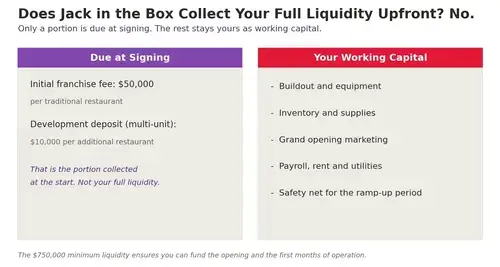
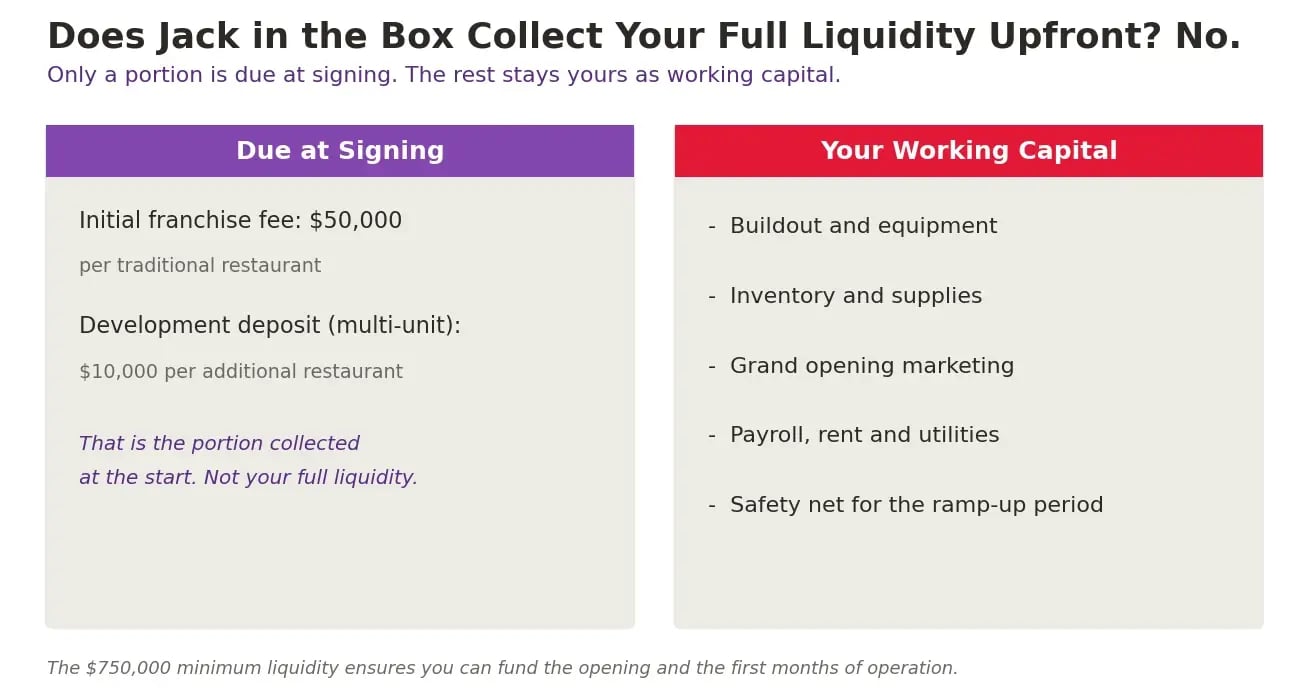
No. This is the misconception I correct most often. Jack in the Box does not collect your full liquid assets at signing. What you pay at signing is the initial franchise fee and, if you commit to multiple restaurants, a development deposit tied to the number of locations in your agreement. The rest of your liquidity stays with you as working capital.
Because opening a restaurant costs more than the franchise fee, and revenue takes time to build. Your liquidity covers the startup costs and the operating expenses during the ramp-up period. Here is where it goes.
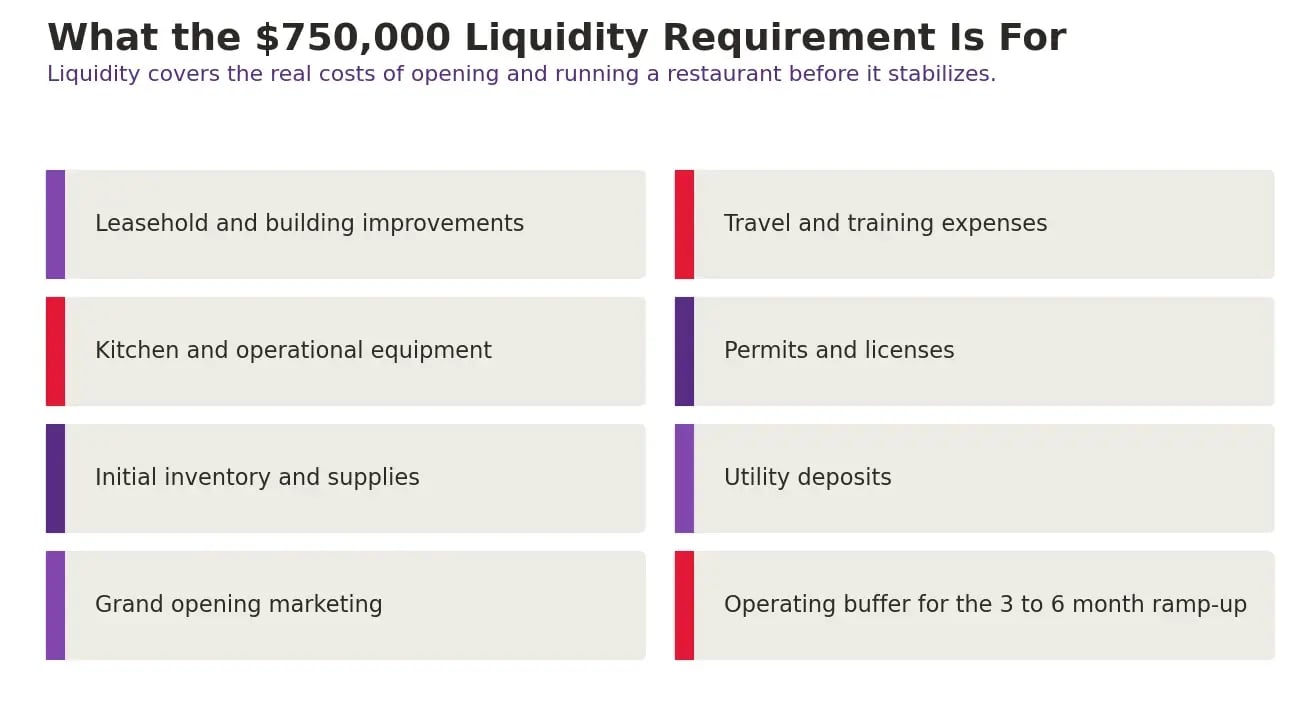
That ramp-up period, the time it takes to build a customer base and reach consistent revenue, typically lasts three to six months and sometimes longer. The buffer is there so financial strain never forces you to cut corners. A detailed breakdown of these costs lives in Item 7 of our Franchise Disclosure Document, and you can see the full numbers in our guide to how much it costs to buy a franchise.
Liquidity is not only about getting open. It also gives you flexibility once you are running. Unexpected costs are part of business, equipment fails and conditions change, and a cushion lets you handle that without jeopardizing the restaurant. It also positions you to invest in growth, whether that is upgrading equipment or opening additional locations down the road.
Demonstrating strong liquidity tends to make the process smoother. If you need financing for part of your investment, which is common, a solid liquidity position makes you a more attractive candidate to lenders. Showing financial strength early can also reduce back-and-forth and help you move through approval more efficiently. If you want the full sequence, see our steps to ownership.
A minimum of $750,000 in liquid assets, alongside a $1.5 million minimum net worth.
No. At signing you pay the franchise fee and any development deposit. The rest of your liquidity is your working capital.
Startup costs like buildout, equipment, inventory, and training, plus operating expenses during the three to six month ramp-up.
To make sure you can fund the opening and the early operating period without financial strain, which protects both the franchisee and the brand.
It can. It makes financing easier to secure and can reduce due-diligence time.
If you want to talk through the liquidity and net worth requirements for your situation, reach out to our franchise team.
About the author: Dustin Thompson works in Franchise Marketing & Development at Jack in the Box, where he helps prospective franchisees understand the financial requirements of ownership. Learn more on his author page.